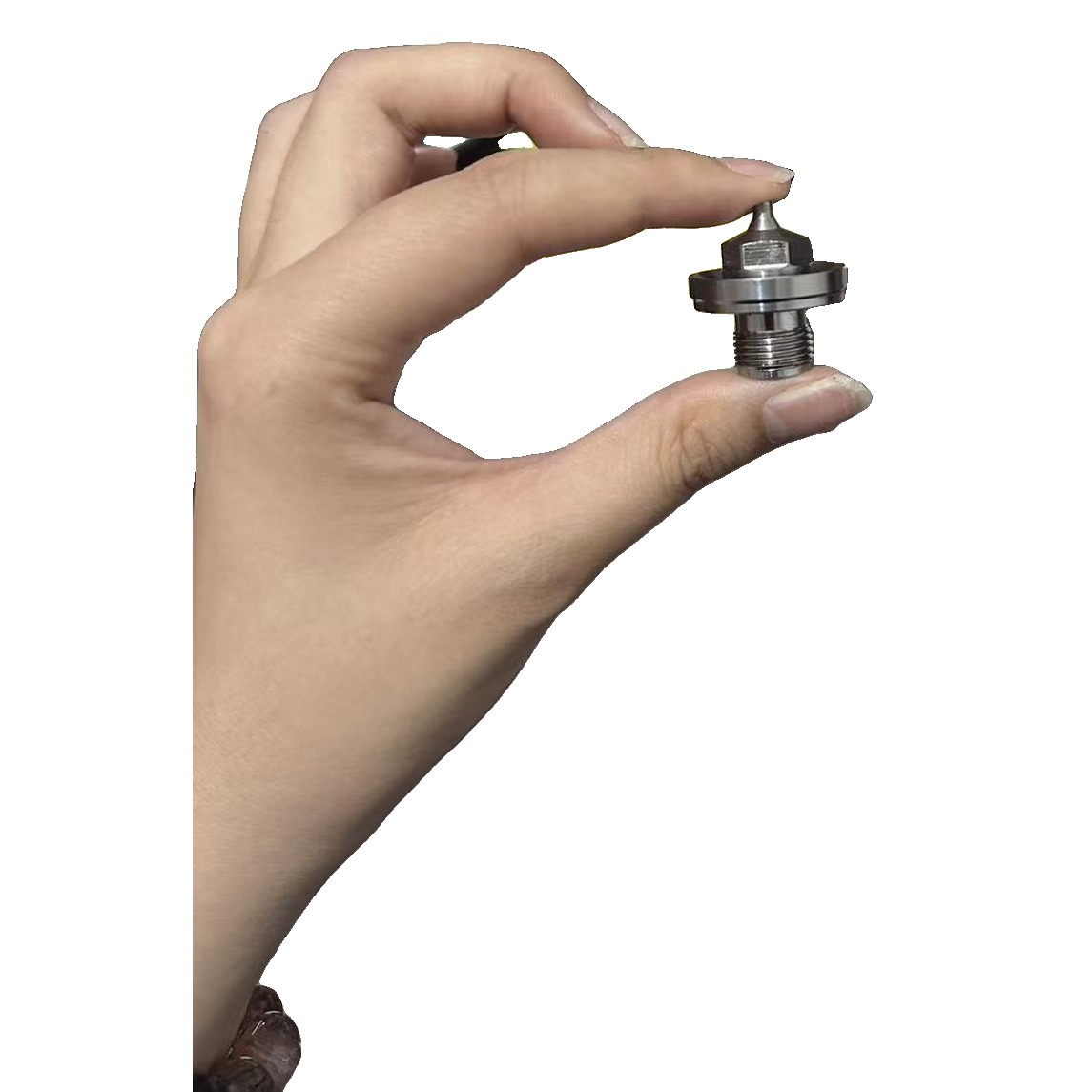
Quick answer: Choose a pneumatic needle scaler by the surface you are cleaning - finer needles (smaller diameter, more of them) for detail and light rust on contoured metal, heavier needles (larger diameter) for aggressive scale, paint and weld slag on flat or heavy stock. Match the body style to the work (pistol-grip for control, in-line for reach into corners), then size the air supply - average air consumption, a matched coupler and clean regulated air - so the needles actually keep hammering at speed. JIAJIE offers needle scalers and matching reciprocating files through OEM/ODM and drawing-based machining.
A needle scaler is the air tool you reach for when grinding would bite into the base metal or a chisel would take all day. It bundles a set of needles that hammer thousands of times a minute, knocking off rust, old paint, weld slag, mill scale and even concrete residue while leaving the solid surface beneath largely untouched. In our pneumatic power tools guide it sits alongside die grinders, impact wrenches, angle grinders, drills, sanders and engraving pens as part of the air-powered metalworking range. That overview compares tools at a high level; this guide focuses on the choices that decide whether a needle scaler is right for your job and which build to specify: needle size, action speed, body style and the air behind it.
What a pneumatic needle scaler is for
The scaler's strength is selectivity. Because the needles only reach the high spots, they strip coatings and corrosion from uneven, contoured or fragile surfaces far better than a grinder, which removes material indiscriminately. Typical jobs include:
- Rust and corrosion removal on frames, tanks, pipes and machinery without thinning the steel.
- Paint and coating stripping where you want the substrate intact for repaint or re-coat.
- Weld slag and spatter cleanup after welding, faster and cooler than grinding.
- Mill scale and concrete residue on fabricated and cast parts before finishing.
For very tight detail and small burrs, the same family includes reciprocating files that trade the needle bundle for a single filing head - handy in corners a scaler cannot reach. Both live in the industrial pneumatic tools range.
Needle scaler types at a glance
| Build | Needle diameter | Best for | Notes |
|---|---|---|---|
| Fine-needle scaler | Smaller diameter, more needles | Light rust, thin paint, contoured and fragile surfaces | Selective, gentler on the base metal |
| Standard scaler | Medium diameter | General rust, paint and weld slag | The everyday balance of speed and control |
| Heavy-needle scaler | Larger diameter | Thick scale, heavy corrosion, concrete residue | Most aggressive; fastest on flat, heavy stock |
| Reciprocating file | Single filing head | Detail, burrs, tight corners | Complements the scaler for spots needles miss |
These are selection categories rather than one fixed specification - across a range you choose the needle diameter and needle count that fit the surface. If you are unsure how to read the speed and air figures on a tool plate, our guide to reading a pneumatic tool spec sheet explains free vs working speed, average air use and air-inlet size.
How to choose - the criteria that matter
- Needle diameter and count. Smaller needles reach into pits and contours and treat the surface gently; larger needles hit harder and clear heavy scale fast. More needles spread the impact for a smoother finish. Pick the lightest needle that still removes your coating.
- Blows per minute (BPM). Higher BPM clears material faster but is harder to control on thin or fragile work. Match aggression to the coating and the substrate.
- Body style. A pistol-grip scaler gives a natural, controlled hold for general work; an in-line (straight) body reaches into channels, pipes and corners a pistol head cannot. Choose by where the surface sits.
- Average air consumption. A scaler's air draw must fit your compressor alongside every other tool you run. Our CFM sizing guide shows how to total tool air use and apply a margin so the needles never slow under load.
- Duty and durability. For production-scale descaling, weigh tool weight, vibration and serviceability - a tool used all day should be the one you can hold and maintain.
Air supply - the scaler only hits as hard as the air lets it
A needle scaler is air-driven, and a sagging line drops BPM just as surely as a weak motor would. Three setup details decide whether you reach rated speed:
- Pressure at the tool. A regulator holds pressure steady; air preparation with a filter and regulator is covered in our FRL guide and the air preparation range.
- Coupler restriction. On long runs or shared lines a standard coupler can choke a demanding tool. Our high-flow vs standard coupler guide explains when the wider passage pays off, and the quick coupler range covers the profiles and materials.
- Lubrication. The vane or piston motor needs a little oil to stay free and cool - our air tool lubrication guide covers how much and how often.
If the scaler slows or stalls under load but spins freely off the work, the cause is usually air, not the tool - our pneumatic tool troubleshooting guide lists the field checks. And if you are weighing air against battery for the bench, our pneumatic vs cordless guide compares power-to-weight, runtime and cost of ownership.
Matching the scaler to the job
| Surface / job | Needle scaler setup | Why |
|---|---|---|
| Light rust on thin sheet | Fine needles, controlled BPM | Strips without denting or thinning the metal |
| General paint and weld slag | Standard needle scaler | Balanced speed and control for daily work |
| Heavy scale on plate or castings | Heavy needles, higher BPM | Maximum material removal per pass |
| Contoured or fragile parts | Fine needles, in-line body | Reaches detail; gentle on the substrate |
| Tight corners and burrs | Reciprocating file | Single head fits where the bundle cannot |
Sourcing needle scalers from JIAJIE
JIAJIE Pneumatic is the export brand of a Ningbo, China workshop established in 2005 with around 15 people, making pneumatic quick couplers, air-line fittings, air-preparation units, airbrushes, mini compressors and pneumatic power tools such as needle scalers, die grinders, impact wrenches, angle grinders, drills and sanders. The workshop offers OEM/ODM and drawing-based machining, so needle diameter, body style, branding and packaging can be matched to your range rather than forced into ours. The standard minimum order is 1,000 pieces per item, and free samples can be prepared in 3-5 days so you can validate fit, action and removal quality on your own parts before a production run. Because the Ningbo site sits roughly 40 km from the Port of Ningbo, export shipping is straightforward. For help matching a needle scaler or reciprocating file to your tools and market, contact David Liu at DAVID@nbliunian.com or on WhatsApp +86 183 6130 1735.
Frequently asked questions
What is a pneumatic needle scaler used for?
A needle scaler removes rust, old paint, weld slag, mill scale and concrete residue with a bundle of rapidly hammering needles. Because the needles only strike the high spots, it strips coatings and corrosion from uneven or fragile surfaces while leaving the solid base metal largely intact - tasks where a grinder would cut into the substrate.
What needle size should I choose?
Match the needle to the surface. Finer needles (smaller diameter, more of them) suit light rust, thin paint and contoured or fragile metal where you want a gentle, selective clean. Heavier needles (larger diameter) clear thick scale, heavy corrosion and concrete residue fast on flat or heavy stock. Pick the lightest needle that still removes your coating.
Does a needle scaler need much air?
Yes - a scaler is air-driven and its blows-per-minute drops if the supply sags. Size the compressor to the tool's average air consumption plus every other tool you run together, with a margin so the needles never slow under load (see the CFM sizing guide). Feed it clean, regulated air through a matched hose and coupler so it hammers at rated speed.
Pistol-grip or in-line needle scaler?
Choose by where the surface sits. A pistol-grip body gives a natural, controlled hold for general bench and site work. An in-line (straight) body reaches into channels, pipes and corners a pistol head cannot. For tight detail and small burrs that neither reaches, a reciprocating file in the same family is the complement.
Can JIAJIE supply needle scalers for OEM or private-label ranges?
Yes. JIAJIE Pneumatic is a Ningbo, China workshop established in 2005 offering OEM/ODM and drawing-based machining across its pneumatic power tool lines, including needle scalers and reciprocating files. The standard minimum order is 1,000 pieces per item and free samples can be prepared in 3-5 days so you can validate fit and performance before a production run. Contact David Liu at DAVID@nbliunian.com or WhatsApp +86 183 6130 1735 to discuss specifications.
Shop the range: Pneumatic Needle Scalers · Industrial Pneumatic Tools · Air Tool Accessories · Quick Couplers